

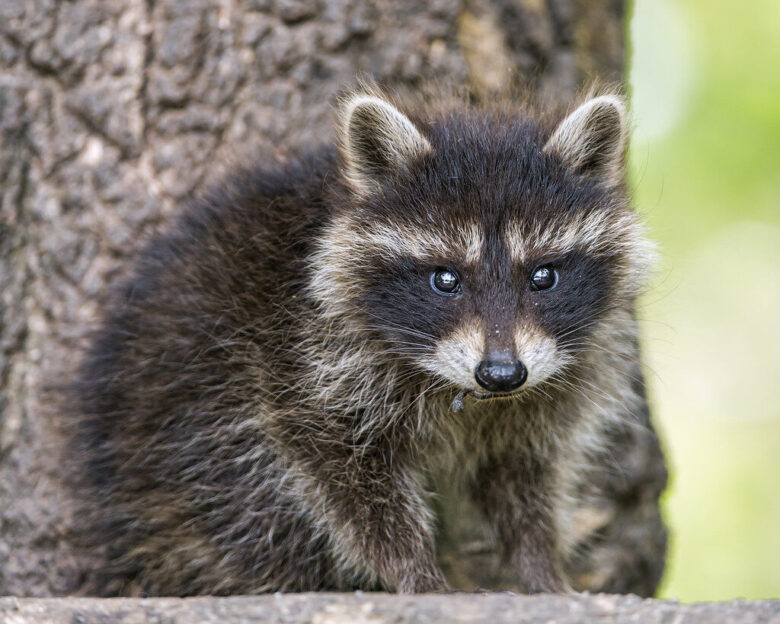
Starting Friday, thousands of small vaccine-laced baits will be spread across Harford County parks and neighborhoods as part of a new effort to stop rabies from spreading through the local raccoon population.
What’s happening: The Harford County Health Department will launch a pilot program Friday, September 4, distributing more than 15,000 baits containing a rabies vaccine throughout the county. Ground teams in marked state vehicles will place the baits in areas where raccoons are likely to live and roam.
About the vaccine: The baits use a vaccine called Raboral V-RG. It cannot cause rabies and is described as safe for raccoons, pets, and other animals. The same vaccine has been used in Anne Arundel County since 1998 and in more than ten other states. The baits come in two forms: a small brown brick with a liquid vaccine packet inside, and a condiment-style packet coated in a waxy fish-based attractant. A raccoon has to bite into the bait to receive the vaccine.
What’s new: Harford County has not run a program like this before. A rise in positive rabies tests among local wildlife, along with concerns from residents, led County Executive Bob Cassilly to support funding it.
“Rabies is a serious disease. Given the rise in positive tests among local wildlife and community concerns, I was eager to support the Health Department’s request to fund this vaccination program. Our goal is to limit cases in the wild to protect people, pets, and other animals,” Cassilly said.
What this means for you: If you find one of the baits, do not pick it up. The health department says anyone under 18, pregnant, immunocompromised, or with a chronic skin condition should not handle the baits. The fish-based attractant can also cause stomach irritation in dogs, cats, and ferrets.
Pet owners should keep animals confined or on a leash during the baiting period and for two weeks after. Anyone who comes into contact with a bait should call the Harford County Health Department at (410) 877-2300.
Why it matters: Rabies is a fatal disease spread through the bite or scratch of an infected animal, or when an infected animal’s saliva contacts a person’s eyes, nose, mouth, or an open wound. While pets can be vaccinated against rabies, a person who is exposed must go through a costly series of shots.
“We are committed to keeping our community healthy, and the launch of this program marks an important step forward in preventing the spread of rabies and keeping Harford County residents and animals safe,” said Lauren Levy, the county’s health officer.
The path forward: More information about the program is available at harfordcountyhealth.com.